Wednesday, 2 February 2011

This is somewhere that i thought would be suitable for us to film as it look like a quiet place that will have a lot of places to hide things which is exactly what we need for our opening sequence.


my moodboard

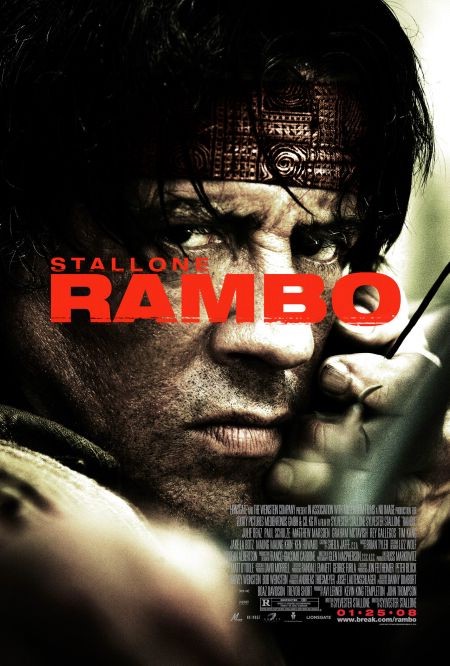
RAMBO 4

In this opening sequence the camera show us a long shot of people being killed, this long shot allows us to see the vast amount of people that were being killed at the time. We see a lot of cuts from one chaotic scene to the next, this is an editing technique and it helps the audience to see that there is a lot going on. The mise-en-scene allows us to see the dead bodies and people being shot at, this could mean  that we will see a lot of killing in this film or it could mean that the film will be about the killing that we have just seen. The sound allows us to hear the people shouting and screaming this shows us that the people are scared as shouting/screaming is a convention of fear.
http://www.youtube.com/watch?v=DFtQ2TjfKo0

Thursday, 27 January 2011

life on mars

Life on mars is a britsh science fiction/police drama televison series it is broadcasted by the BBC.
The cinematic techniques (camera and mise-en-scene) in this episode are used to show the differences between to era's. The camera does this by showing the audience an establishing shot of a modern day car then later on in the scene we see a shot of an old fashioned run down car. The mise-en-scene does this by using the costume, it shows the officer in a suit which is a convention of police clothing then later in the other era we see him in more casual clothing this shows us that the dress code for police has changed over time.
http://www.youtube.com/watch?v=cmmFwGgC4aU

Wednesday, 12 January 2011

'Silent Witness' analysis.


This opening sequence of silent witness is about a man called benjamin who is being questioned by the police for murder, Benjamin is a hasidic jew.
The mise-en-scene represents benjamin as someone who is very serious about his religon, his cotume and his plain and impersonal bedroom help to show us that he is a deeply religous individual.
Sound: When the police arrive at the house of Benjamin, we hear a change in the music (which is non-diegetic) this shows the audience that something important has happened/ is going to happen.
Editing: When Benjamin is being interviewed by the police we see various reaction shots from Benjamin to the police, this helps us to see how the expressions of the characters change after what has been said.
Camera: As the police are driving to Benjamins house we see a point of view shot from one of the police in the car looking at Benjamins house, this makes us the audience feel as if we are in the car with the police.

Analysis of 'The Proposition'

These are the notes taken by my class and I.
Lighting/Colour: The film is in black and white.
Camera angle/movement: We see a wide range of shots medium shots, long shots, close-ups .
Framing: In this opening we see that the pictures never take up the full screen.
Sound: We hear a lot of non-diegetic sound which comes from the music.
mise-en-scene: We see alot of pictures and we aslo see a montage

Mise-en scene in The Big Lebowski'

These are the notes that my class and i took.
Setting/background: The main part of the story takes place in the dudes house.
Props: We see a tumbleweed rolling across the street which makes the place seem abandoned, products in the supermarket, bowling ball. dirty toilet.
Costumes: Everyone is dressed casually/ wearing house clothes, the dude's costume makes him look poor.
Lighting: Outside is mainly dark
Characters: It seems as if the dude is the protagonist, the first character we see is the dude, the dude is attacked by 2 characters.